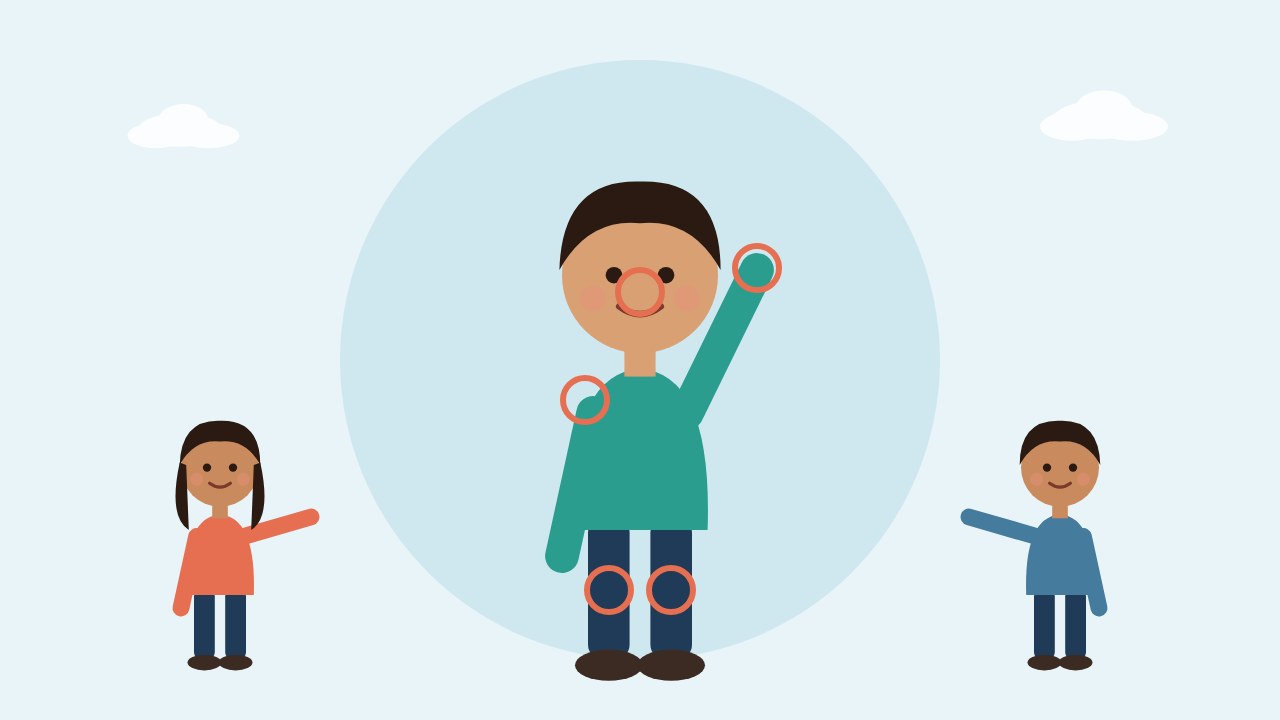
Whether you are a student, a balikbayan, a parent teaching a child, or simply learning Filipino, knowing the parts of the body in Tagalog is one of the most useful vocabulary sets. You will use these words when talking about health, describing people, visiting a doctor, or playing with kids. This guide lists the most common body parts in Tagalog with simple pronunciation, example sentences, useful phrases, and a short quiz.
Body Parts in Tagalog: The Head and Face
| English | Tagalog | Pronunciation |
|---|---|---|
| head | ulo | OO-loh |
| hair | buhok | boo-HOHK |
| face | mukha | mook-HAH |
| forehead | noo | noh-OH |
| eyebrow | kilay | KEE-lie |
| eye | mata | mah-TAH |
| eyelash | pilikmata | pee-leek-MAH-tah |
| ear | tainga / tenga | tah-ee-NGAH / teh-NGAH |
| nose | ilong | EE-lohng |
| cheek | pisngi | pees-NGEE |
| mouth | bibig | bee-BEEG |
| lips | labi | lah-BEE |
| teeth / tooth | ngipin | NGEE-peen |
| tongue | dila | dee-LAH |
| chin | baba | BAH-bah |
Tip: Baba (chin) is stressed on the first syllable. When stressed on the last syllable, babà also means “down” or “to go down,” so listen to context.
Upper Body
| English | Tagalog | Pronunciation |
|---|---|---|
| neck | leeg | leh-EHG |
| shoulder | balikat | bah-LEE-kaht |
| chest | dibdib | deeb-DEEB |
| back | likod | LEE-kohd |
| stomach / belly | tiyan | tee-YAHN |
| waist | baywang | bai-WAHNG |
| arm | braso | BRAH-soh |
| elbow | siko | SEE-koh |
| armpit | kilikili | kee-lee-KEE-lee |
Hands and Fingers
| English | Tagalog | Pronunciation |
|---|---|---|
| hand | kamay | kah-MAI |
| palm | palad | PAH-lahd |
| finger | daliri | dah-LEE-ree |
| fingernail | kuko | KOO-koh |
| wrist | pulso / galang-galangan | POOL-soh / gah-LAHNG gah-LAH-ngahn |
Tagalog also has a special name for each finger:
| Finger | Tagalog |
|---|---|
| thumb | hinlalaki |
| index finger | hintuturo |
| middle finger | hinlalato |
| ring finger | palasingsingan |
| little finger | hinliliit |
Hintuturo comes from turo (to point), and palasingsingan comes from singsing (ring), so these names are easy to remember.
Lower Body
| English | Tagalog | Pronunciation |
|---|---|---|
| hip | balakang | bah-LAH-kahng |
| thigh | hita | hee-TAH |
| knee | tuhod | TOO-hohd |
| leg (lower leg) | binti | been-TEE |
| ankle | bukung-bukong | boo-KOONG boo-KOHNG |
| foot | paa | pah-AH |
| heel | sakong | sah-KOHNG |
| toe | daliri sa paa | dah-LEE-ree sah pah-AH |
Note: In everyday speech, many Filipinos use paa for both the foot and the whole leg, especially when talking to children.
Inside the Body
| English | Tagalog |
|---|---|
| skin | balat |
| bone | buto |
| blood | dugo |
| heart | puso |
| lungs | baga |
| brain | utak |
| liver | atay |
| stomach (organ) | sikmura |
| muscle | kalamnan |
Useful Phrases with Body Parts
| English | Tagalog |
|---|---|
| My head hurts. | Masakit ang ulo ko. |
| My stomach hurts. | Masakit ang tiyan ko. |
| Wash your hands. | Hugasan mo ang mga kamay mo. |
| Brush your teeth. | Magsipilyo ka ng ngipin. |
| Close your eyes. | Pumikit ka. |
| Raise your hand. | Itaas mo ang kamay mo. |
| She has long hair. | Mahaba ang buhok niya. |
| I sprained my ankle. | Napilay ang bukung-bukong ko. |
| Where does it hurt? | Saan ang masakit? |
Grammar Tip: Saying “My,” “Your,” “His/Her”
In Tagalog, the possessive word usually comes after the body part:
- ang ulo ko – my head
- ang kamay mo – your hand
- ang mata niya – his/her eye
To make a body part plural, add mga before it: ang mga mata ko (my eyes).
Common Expressions (Idioms) with Body Parts
Filipino has many colorful expressions that use body parts. Here are a few:
- Mabigat ang kamay – literally “heavy hand”; means lazy or slow to work.
- Makapal ang mukha – literally “thick face”; means shameless.
- Balat-sibuyas – literally “onion skin”; a person who is easily hurt.
- Malaki ang ulo – literally “big head”; means conceited or arrogant.
Learn more Filipino expressions in our lessons on idyoma and sawikain.
Sample Dialogue: At the Doctor’s Clinic
Here is a short, simple conversation you might hear at a clinic or health center:
Doktor: Magandang umaga. Ano ang nararamdaman mo? (Good morning. What are you feeling?) Pasyente: Masakit po ang lalamunan at ulo ko. (My throat and head hurt.) Doktor: Kailan pa nagsimula? (When did it start?) Pasyente: Kahapon po ng gabi. (Last night.) Doktor: Buksan mo ang bibig mo at ilabas ang dila. (Open your mouth and stick out your tongue.) Pasyente: Ganito po ba? (Like this?) Doktor: Oo. Uminom ka ng maraming tubig at magpahinga. (Yes. Drink lots of water and rest.)
New word: lalamunan means throat. Notice the polite word po, which Filipinos use when speaking to elders or people in authority. Learn more polite expressions in Please in Tagalog.
Practice Activity for Kids and Beginners
Point to each body part and say it aloud in Tagalog. Start slowly, then try to go faster:
- Kamay (hand)
- Siko (elbow)
- Leeg (neck)
- Tiyan (stomach)
- Ilong, pisngi, baba (nose, cheek, chin)
Repeat this game every day for a week, and the words will stick. You can also label a drawing of a person with the Tagalog words to review.
Practice Quiz
Translate into Tagalog.
- eye
- knee
- shoulder
- ring finger
- My stomach hurts.
- Wash your hands.
Answers: 1. mata; 2. tuhod; 3. balikat; 4. palasingsingan; 5. Masakit ang tiyan ko.; 6. Hugasan mo ang mga kamay mo.
Keep Learning Tagalog
Build your basic vocabulary with these related lessons:
Frequently Asked Questions (FAQ)
What is “body” in Tagalog?
The body is katawan. “Parts of the body” is mga bahagi ng katawan.
Is it “tainga” or “tenga”?
Both mean “ear.” Tainga is the more formal spelling, while tenga is the common spoken form.
What is the difference between “binti” and “hita”?
Hita is the thigh (upper leg), while binti is the lower leg, between the knee and the ankle.
How do you say “My whole body hurts” in Tagalog?
Say “Masakit ang buong katawan ko.”